
Tibial Plateau Levelling Osteotomy (TPLO)
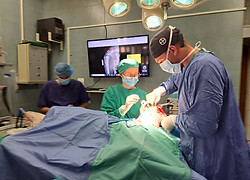
Advanced cruciate ligament surgery for dogs
A cranial cruciate ligament (CCL) injury is one of the most common causes of hind-leg lameness and knee pain in dogs. TPLO surgery is an advanced procedure that stabilises the knee by changing the angle of the tibial plateau, allowing the joint to function without relying on the damaged ligament.
At Honeydew Animal Clinic, we provide TPLO surgery for suitable patients following a thorough examination and assessment of the affected knee.
What is a TPLO?
A Tibial Plateau Levelling Osteotomy (TPLO) is a surgical technique used to treat cranial cruciate ligament (CCL) rupture or significant injury in dogs.
Rather than attempting to replace the damaged ligament, TPLO surgery changes the mechanics of the knee.
During the procedure, the top portion of the tibia is carefully cut and rotated to alter the angle of the tibial plateau. The bone is then stabilised in its new position using a specialised bone plate and screws.
Once the bone has healed, the knee is able to remain stable during weight-bearing and movement without relying on the torn ligament.
When is TPLO recommended?
TPLO can be particularly beneficial for:
-
Medium- to large-breed dogs
-
Active or athletic dogs
-
Dogs with complete or significant CCL rupture
-
Dogs with ongoing knee instability and lameness
-
Patients where long-term return to good function is an important consideration
Every patient is different. Our veterinarians will assess your dog's knee, overall health and lifestyle before recommending the most appropriate treatment.
How is a TPLO performed?
Before surgery, X-rays of the knee are taken and carefully measured to determine the appropriate correction required.
During surgery:
1. The knee is examined
The joint is assessed for damage to the cruciate ligament and meniscus.
2. The tibia is carefully cut
A specialised curved saw is used to make the required bone cut.
3. The tibial plateau is rotated
The cut portion of the tibia is rotated to achieve the desired angle.
4. The bone is stabilised
A specialised stainless-steel plate and bone screws hold the tibia securely in its new position while the bone heals.
5. Post-operative X-rays are taken
Follow-up imaging helps monitor the position of the implant and progression of bone healing.
TPLO Before & After

TPLO surgery can provide good functional outcomes when combined with appropriate surgical technique, post-operative care and rehabilitation.
Benefits of TPLO Surgery
Excellent knee stability
TPLO changes the biomechanics of the knee rather than relying on the damaged cruciate ligament.
Designed for active dogs
It is commonly selected for larger, active and athletic dogs where a strong return to function is important.
Long-term function
Successful TPLO surgery can allow many dogs to return to a comfortable, active lifestyle.
Helps manage future joint disease
Stabilising the knee can help reduce ongoing abnormal movement within the joint, although arthritis can still develop following a CCL injury.
What happens after TPLO surgery?
Recovery is just as important as the surgery itself.
For the first 6–8 weeks, your dog will need strict restriction of activity while the bone heals.
Initially, exercise is limited to short, controlled lead walks for toileting. Activity is then gradually increased according to your veterinarian's assessment and follow-up X-rays.
Your dog's recovery plan may include:
-
Strict rest and confinement
-
Controlled lead walking
-
Follow-up examinations
-
Follow-up X-rays
-
Gradual increases in activity
-
Rehabilitation exercises where appropriate
Most dogs show significant improvement in their use of the leg during the first several weeks, but complete recovery takes considerably longer. A return to unrestricted activity commonly takes around 4–6 months, depending on the individual patient and the progress of healing.
Are there risks or complications?
As with any orthopaedic surgery, complications are possible.
Potential complications include:
-
Infection
-
Inflammation around the patellar tendon
-
Meniscal injury or re-injury
-
Implant-related complications
-
Delayed bone healing
-
Fracture of the tibia or fibula
Serious complications such as implant failure or bone fracture are uncommon, but your veterinarian will discuss the potential risks with you before surgery.
Why is TPLO surgery more involved than a routine procedure?
TPLO requires specialised orthopaedic equipment, implants, precise measurements and surgical training.
The procedure involves carefully altering the shape and angle of the tibia and securing the bone with a specialised plate and multiple screws. Pre-operative and post-operative X-rays are also an important part of the procedure.
The combination of specialised equipment, implants, surgical expertise, anaesthesia, imaging and post-operative care contributes to the cost of TPLO surgery.
Frequently Asked Questions
Does my dog need TPLO surgery?
Not every dog with a CCL injury requires TPLO surgery. Treatment depends on factors including your dog's size, activity level, degree of knee instability, age, overall health and the condition of the joint. Our veterinarians can assess your dog and discuss the most appropriate options.
Can a CCL injury heal without surgery?
Some smaller or less active dogs may manage a CCL injury with conservative treatment, but persistent knee instability can lead to ongoing pain, muscle loss and progression of arthritis. Surgery is often recommended when good long-term function is the goal, particularly in larger or active dogs.
How long does TPLO surgery take?
The overall process, including preparation, surgery and recovery from anaesthesia, takes several hours. Your veterinary team will provide you with specific information about your dog's procedure.
When will my dog walk normally again?
Many dogs begin using the operated leg within the first few days, with gradual improvement over the following weeks. The bone generally requires 6–8 weeks or longer to heal sufficiently, and unrestricted activity usually takes several months.
Will my dog still develop arthritis?
A CCL injury causes changes within the knee that can lead to osteoarthritis. TPLO can improve stability and function and may help reduce progression, but it cannot completely prevent arthritis.
Does your dog have a cruciate ligament injury?
If your dog has suddenly become lame on a hind leg, is reluctant to exercise, struggles to get up, or shows signs of knee pain, a CCL injury may be one possible cause.
Early assessment can help determine the extent of the injury and the most appropriate treatment.
Talk to our veterinary team about TPLO surgery
Honeydew Animal Clinic
011 795 2034